

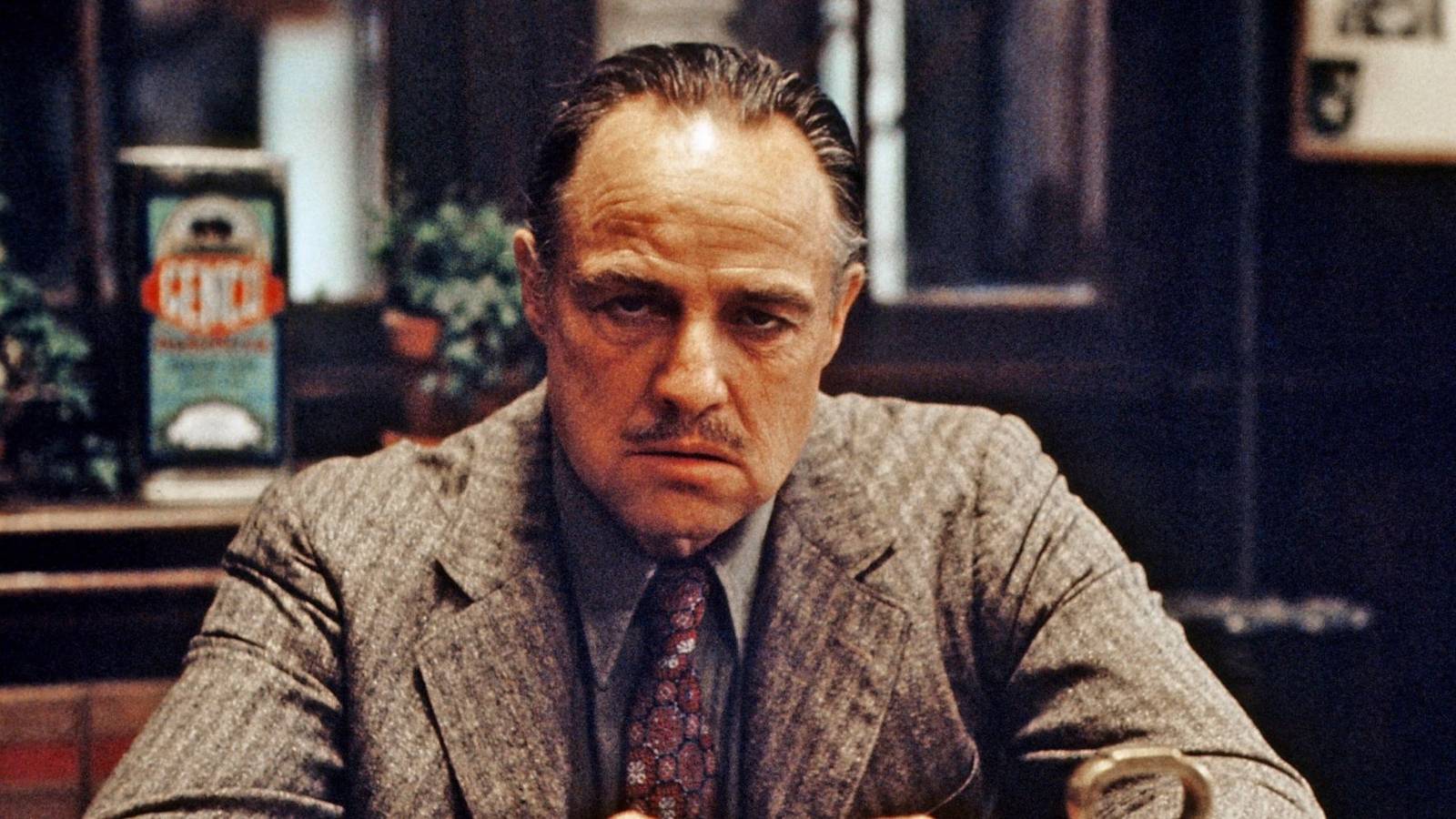
Crime movies live or die on pressure. Not just plot pressure, but moral pressure, social pressure, pressure inside rooms, pressure inside faces, pressure in the split second before somebody talks too much, reaches too fast, trusts the wrong person, or realizes they were never really in control. They create entire systems of behavior. They show how power moves, how loyalty gets tested, how identity gets performed, and how one bad choice can poison everything around it.
That is why the greatest crime movies do not all feel the same. Some are sprawling empires built on tradition and blood. Some are street-level panic attacks. Some are funny until they suddenly are not. Some are procedural machines. Some are character studies where every smile feels dangerous. But the ones that have lasted the time of time, the ones that feel perfect, all have one thing in common: there is no wasted movement in them. This list is about ten such films, ranked.
10
‘Donnie Brasco’ (1997)
What makes Donnie Brasco so strong is that it never plays the undercover angle like a gimmick. It understands that the real story is not “Will he get caught?” The real story is what happens when performance stops feeling like performance. Donnie (Johnny Depp) infiltrates a crew, slowly building a second life, and the movie is patient enough to let that become emotionally ugly instead of dramatically flashy.
That is where Lefty (Al Pacino) makes the whole film sting. Lefty is not a kingpin and not even intimidating compared to most movie gangsters. He is a tired, aging soldier who has given decades to a life that has not paid him back. He sees something in Donnie because he needs to. He wants usefulness, companionship, validation, maybe even a kind of family. The movie knows that betrayal hits harder when affection is real. That is why their scenes work so well. Nothing in them feels forced for effect. It feels human, and that makes the ending brutal.
9
‘The Untouchables’ (1987)

Brian De Palma’s The Untouchables is big, stylish, and completely unashamed of being big and stylish. That confidence is a huge part of why it works. The movie builds a myth, and it does it with total control. From the opening with Al Capone (Robert De Niro) holding court like a celebrity monarch to the final confrontation, everything is heightened in exactly the right way.
But the movie would just be an elegant surface without the way it builds Ness’s transformation. Eliot Ness (Kevin Costner) starts as a man who still thinks the law can operate cleanly against rot. Malone (Sean Connery) is the one who teaches him that fighting an organized criminal empire means accepting uglier realities. The church shootout, the border raid, the Union Station staircase sequence, all mark stages in Ness hardening. De Palma gives the film grandeur, but the structure of the plot keeps it grounded.
8
‘Dog Day Afternoon’ (1975)

There are crime movies where the robbery is the engine. In Dog Day Afternoon, the robbery is almost beside the point within minutes. The bank job goes wrong so fast, so publicly, and so messily that the movie becomes about desperation turning into theater. Sonny (Al Pacino) is not a heist mastermind at all. And instead, just goes raw, improvises while unraveling, pleading, performing, and trying to hold onto some idea of dignity while the whole thing slips out of his hands.
The film keeps changing shape and yet doesn’t lose tension. It is funny, sad, chaotic, political, intimate, humiliating, and suspenseful all at once. The crowd outside, the police presence, the television circus, the hostages adjusting to Sonny as if they are trapped in the strangest social event of their lives — it all creates this feeling that the crime has stopped being private and become public spectacle. Pacino is astonishing because he never asks for sympathy directly. He lets Sonny’s nerves, ego, fear, and genuine feeling collide, and the movie is stronger because it never smooths those contradictions out.
7
‘L.A. Confidential’ (1997)

So many crime films are built around corruption, but L.A. Confidential is one of the few that really understands corruption as a language. Everybody in this movie is speaking it differently. Bud White (Russell Crowe) uses violence. Ed Exley (Guy Pearce) uses procedure and ambition to climb structures he knows are dirty. Jack Vincennes (Kevin Spacey) glides through the industry side of police celebrity until he realizes he has traded too much of himself away. The beauty of the movie is that it does not flatten these men into types. It gives each one a full moral shape.
The film covers a lot of ground, including but not limited to murder, prostitution, blackmail, police rot, media rot, political games but it never feels overloaded. And that’s because every thread feeds the same poisoned ecosystem. Lynn Bracken (Kim Basinger) is not just there to add glamour or vulnerability. Sid Hudgens (Danny DeVito) is not just comic energy. Dudley Smith (James Cromwell)’s warmth is not random. The film knows exactly how appearances function in Los Angeles and exactly how much blood is hiding under polished surfaces.
6
‘Scarface’ (1983)

Another Pacino entry on the list and while people reduce Scarface to mere excess because the movie is excessive, it is also loud, swollen with appetite, drenched in ego, and never subtle about Tony Montana’s (Pacino) hunger. But that’s hard to see and not for everyone. The film is not admiring Tony’s rise in some empty way. It is showing a man whose sense of self is so aggressive, so unstable, and so fueled by grievance that success only gives him a bigger stage to destroy himself on.
Tony Montana is played as a live wire of contempt, paranoia, and raw will. Pacino does not make him cool in any safe sense. He makes him watchable because Tony is always pressing too hard, wanting too much, insulting the limits around him, trying to dominate every room through force of personality. The best thing De Palma does is let the movie’s scale expand with Tony’s empire while also making him more emotionally claustrophobic. By the time he is isolated in that fortress, suspicious of everybody, circling the wreckage of his own relationships, the movie has already told you what kind of ending he deserves. It culminates as a logical climax of a man who could never stop declaring war on boundaries.
5
‘The French Connection’ (1971)

This movie feels dangerous in a way that cannot be faked. The French Connection has the grime, impatience, and ugly momentum of a story that does not care about clean heroism. Popeye Doyle (Gene Hackman) is a great movie cop. He is obsessive, rude, reckless, often wrong in his instincts about people even when he is right about the case, and completely consumed by the chase. He is relentless.
Every pursuit feels rough, overheard, unfinished. Even the investigation has that quality. It is detail, surveillance, stubbornness, and luck. Then the ending arrives and refuses the satisfaction many crime thrillers would reach for. That refusal is part of the perfection for this film.
4
‘Goodfellas’ (1990)

There are crime movies about power, and then there is Goodfellas, which is about seduction. Martin Scorsese helms this film and does not merely show you mob life. He shows you why it feels irresistible from the inside. Henry Hill (Ray Liotta)’s narration, the music, the movement, the jokes, the money, the access, the sense that rules belong to other people, the film builds a total sensory argument for why this life hooks people before it starts tearing them apart.
What makes the movie perfect is how completely it controls that shift. The early stretch has speed and hook, but Scorsese is laying track for collapse the entire time. Jimmy Conway (Robert De Niro)’s stillness is more threatening than louder men. Tommy DeVito (Joe Pesci)’s volatility is funny until it is horrifying. Karen Hill (Lorraine Bracco) being drawn in tells you as much about the glamour of power as Henry’s own excitement does. And then the whole thing starts rotting from within. The cocaine paranoia, the helicopters, the frantic cutting, the way ordinary logistics suddenly feel life-or-death, few movies move from intoxication to suffocation this cleanly.
3
‘The Departed’ (2006)

What separates The Departed from lesser undercover crime films is that it understands identity as damage. Billy Costigan (Leonardo DiCaprio) and Colin Sullivan (Matt Damon) are both trapped by performance, but not in symmetrical ways. Billy is forced to dissolve himself in order to get close to the truth. Colin has built his entire life on false surfaces that he is desperate to maintain. DiCaprio plays Billy like every day is eroding him from the inside. Damon plays Colin with just enough slickness and just enough fear that you can feel how fragile his control really is.
Scorsese’s brilliance here is how he keeps the movie alive with constant instability. Nobody feels safe, but more importantly, nobody feels settled. Frank Costello (Jack Nicholson) is not just a mob boss. He is a contaminating force, a man whose unpredictability turns every interaction into a test. The therapy scenes, the phone calls, the near misses, the widening panic as both moles realize the walls are closing in — it all escalates beautifully. And when the violence arrives, it is not ornamental. It is abrupt, rude, and devastating. The film earns its shocks because it has built a world where secrecy has poisoned every relationship in it.
2
‘Heat’ (1995)

Michael Mann’s Heat is one of the rare crime films where professionalism itself becomes tragic. Neil McCauley (Robert De Niro) and Vincent Hanna (Al Pacino) play criminal and cop. They are men so fully shaped by their own codes that ordinary life keeps slipping through their hands. Mann does not rush that idea. He lets it sit in conversations, routines, glances, work habits, and the empty spaces around these men. That patience is why the movie feels so huge.
The famous dinner scene, in particular, where Pacino and De Niro are recognizing themselves in each other, seeing that same tunnel vision reflected back. It’s epic. The robbery and shootout sequences are extraordinary. But Heat is not great because of gunfire alone. It is great because every action scene is tied to character. Neil’s fatal flaw is the tiny crack in his discipline when he cannot let Waingro go. Hanna’s flaw is that the hunt consumes whatever peace might have been possible elsewhere. And you realize at the end that these two men were never built for balance.
1
‘The Godfather’ (1972)

No crime movie has ever understood power, family, inheritance, and moral transformation better than The Godfather. What makes it untouchable is that it does not rely on one thing. It is not just a great mafia film. It is not just a great character study. It is not just brilliantly acted, written, designed, and directed. It is all of that at once, with almost supernatural command over tone and evolution. The key to its perfection is Michael Corleone (Al Pacino). Francis Ford Coppola begins the film with a man who has distance from the family business, and tracks his movement into power with terrifying precision.
Nothing feels skipped. Nothing feels forced. The hospital sequence is where he steps forward. The restaurant murder is where he crosses the line. Sonny Corleone (James Caan)’s death changes the family’s emotional weather. Vito Corleone (Marlon Brando)’s decline opens space. The baptism sequence is where the movie stops pretending Michael’s ascent can be separated from spiritual ruin. That sequence is one of the greatest pieces of cross-cutting ever made. Public sanctity, private slaughter, institutional ritual, personal damnation, all fused into one coronation. And the final image still has no equal. Kay Adams (Diane Keaton) watching the door close on Michael is the whole film clicking into place. Power has been transferred. A soul has been lost. A family has survived by becoming something colder. That is why The Godfather remains the greatest crime movie ever made. It does not simply depict a criminal world. It shows how that world reproduces itself through love, duty, fear, and inheritance until corruption stops looking like an interruption and starts looking like destiny.
Source link
